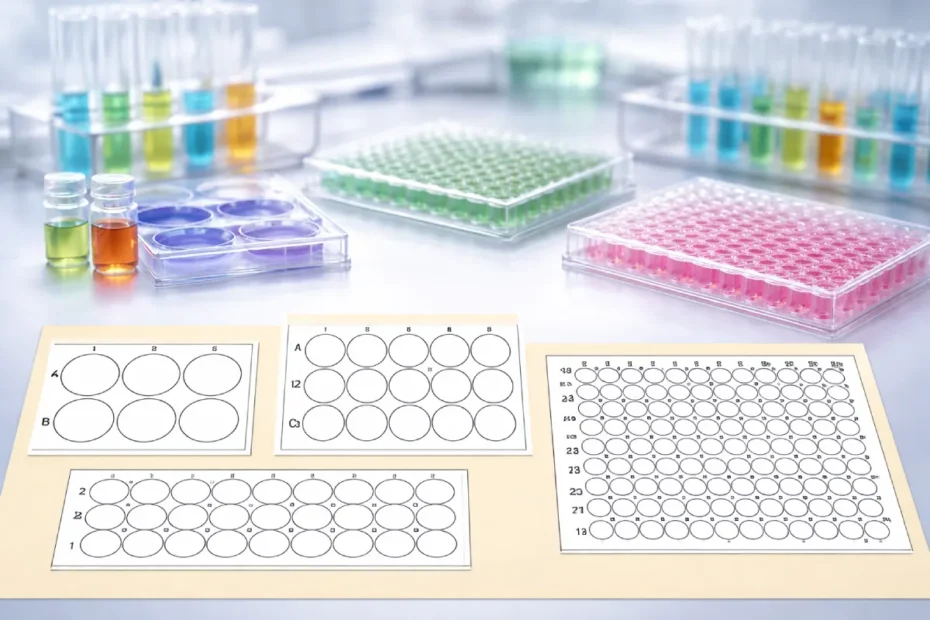
In any laboratory, efficiency and accuracy are paramount. Whether you are working on a PCR experiment, performing an ELISA, or conducting a cell culture assay, 96-well plates are commonly used. However, for these critical experiments, a well-organized, clearly defined layout is essential for success. This is where well plate templates come into play.
A well plate template helps researchers map out their experiments, ensuring that every sample is in its designated spot, reducing the likelihood of mistakes or contamination. Choosing the right well plate template can save time, increase productivity, and improve the overall reliability of your results. However, with so many templates and formats available, selecting the right one can be overwhelming.
In this guide, we will walk you through the different types of well plate templates, how to choose the right one for your experiments, and best practices for using them effectively. By the end, you’ll have all the knowledge you need to make informed decisions that will streamline your lab processes and ensure your experiments run smoothly.
What is a Well Plate?
A well plate is a flat, multi-well plate used in laboratories for a wide range of scientific experiments. The most common type is the 96-well plate, which consists of 8 rows and 12 columns, creating 96 individual wells. Each well holds a small amount of liquid or sample, which is ideal for experiments involving multiple samples or high-throughput screening.
Well plates come in various formats such as 6-well, 12-well, 24-well, and 384-well plates, among others. The number of wells determines the plate’s capacity and its suitability for different experiments. For example, a 96-well plate is commonly used in PCR, ELISA, and cell culture assays because it allows for high throughput and efficient testing. On the other hand, larger plates, such as the 384-well plate, are typically used for high-throughput screening in drug discovery.
Types of Well Plates and Their Use Cases
Different types of well plates are suitable for different kinds of experiments. The most commonly used are:
- 96-Well Plate: This is the standard format for a wide range of applications including PCR, ELISA, and protein assays.
- 6-Well Plate: This plate format is ideal for larger sample volumes, commonly used in cell culture experiments.
- 384-Well Plate: A high-capacity plate used in drug discovery and genomic screening due to its ability to handle a large number of samples in parallel.
When choosing a well plate template, you must consider the experiment type and sample size. For example, if you are running a high-throughput screen, a 384-well plate template will be more appropriate than a 96-well plate template.
The Importance of Well Plates in Laboratory Experiments
Well plates play a critical role in laboratory experiments by providing a standardized method of organizing and conducting tests. They allow researchers to handle multiple samples simultaneously, ensuring consistency across experiments. Additionally, well plates are often used in automated systems, which further increases the efficiency of lab work.
Properly using well plates also ensures that experiments are reproducible. Without a clear system in place, it would be easy to lose track of sample placement, potentially leading to contaminated results or incorrect data. This is where the use of well plate templates becomes essential.
Why Well Plate Templates Are Essential for Accurate Lab Work
One of the biggest challenges in laboratory experiments is avoiding errors during sample preparation. Whether you’re using a 96-well plate or a 384-well plate, it’s easy to lose track of which sample goes into which well, especially when you’re working with multiple reagents and controls. Well plate templates serve as a visual guide that helps you map out your experiment before you begin, ensuring that each sample is placed in the correct well.
By using a well-designed template, you can easily identify your plate’s layout, reducing the risk of human error. Templates also enable better planning of replicates, controls, and blank wells, ensuringyour experiment is set up correctly from the start. Whether you’re doing PCR, ELISA, or drug screening, accuracy is crucial, and well plate templates make this possible.
Improved Efficiency with Templates
One of the key benefits of using well plate templates is increased efficiency. By organizing your experiment before you begin, you save time during sample preparation and reduce the need for repetitive checks and corrections. Templates provide a pre-organized layout, so you can simply fill in your wells according to the template and move forward with your experiment.
In a busy laboratory environment, time is of the essence, and well plate templates can help you stay organized, streamline your workflow, and reduce the amount of time spent on setup. With templates in place, you can focus more on the experimental process rather than worrying about potential errors or misplacements.
Streamlining Experiment Design
A well-designed template is not only a tool for organizing your plates but also a tool for planning your experiment. With templates, you can map out the precise number of samples, the controls, and even replicate wells. This level of planning ensures that your experiment is well thought out before you start the actual work.
Templates are handy for complex experiments that require several steps, such as high-throughput screens or multi-step assays. By breaking down your experiment into a clear and easy-to-follow template, you can ensure that every step is planned correctly, reducing the risk of error and making the process more efficient.
Choosing the Right Well Plate Template for Your Lab
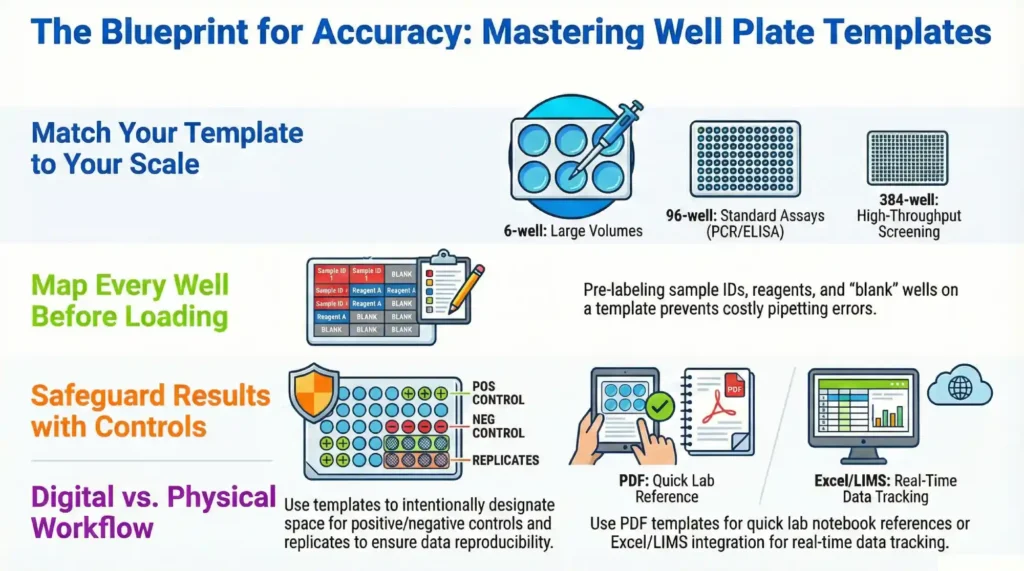
Plate Format and Experiment Type
One of the first considerations when choosing a well plate template is the format of the plate you’ll be using. Well plates come in a variety of sizes, and each is designed for different types of experiments. Selecting the correct format ensures that your experiment is optimized for your sample size and analysis needs.
Common Well Plate Formats and Their Use Cases:
- 6-Well Plates: Best for experiments requiring larger sample volumes, such as cell culture or tissue engineering. These plates are often used to grow cell lines or culture organisms in each well for further analysis.
- 12-Well Plates: These plates are great for smaller experiments that still require a moderate number of samples. They are often used in preliminary assays or to test multiple conditions in parallel, such as in a protein expression study.
- 96-Well Plates: A versatile and widely used format in labs, especially in PCR, ELISA, and other assays. The 96-well plate enables high-throughput screening and is ideal for applications requiring rapid data collection across many samples.
- 384-Well Plates: Ideal for high-throughput screening in drug discovery or genomic research. With a 384-well plate, you can analyze hundreds of samples simultaneously, a key feature for large-scale studies.
When choosing your template, ensure it matches the well-plate format you’ll be working with. The template should help you visualize how the wells will be used and guide you in organizing samples, controls, and reagents based on your experiment’s design.
Template Customization
While pre-designed well plate templates are convenient, many researchers require templates that can be customized to their specific needs. For example, an experiment might require more wells than the standard template allows, or it might require special markers to track specific samples.
Customizable templates offer the flexibility needed for experiments that do not follow a traditional format. Here are some examples of customizations you might consider:
- Color-Coding Wells: This helps quickly identify specific reagents or sample groups. For example, you might color-code control wells or experimental groups to ensure a clear distinction throughout the process.
- Additional Notations: In some cases, add extra annotations to your template, such as specific reagent information, incubation times, or observations during the experiment. These notes help you keep track of important details during your experiment.
- Replicates and Controls: If your experiment includes controls or replicates, customizing the template to include these extra wells can help ensure the layout is appropriate for your study. Having placeholders for controls and replicates ensures your analysis remains robust.
The ability to customize your well plate template is essential for advanced experiments or for replicating complex study designs from the literature or past research.
Material and Durability
When choosing a well plate template, consider the format that best suits your lab’s needs. Templates are available in several formats: PDF, Excel, Word, PNG, and SVG. Each has unique benefits depending on how you plan to use the template:
- PDF Templates: Ideal for physical printing, PDF templates are convenient for labs that prefer a hard copy for quick reference. They can also be attached to experiment protocols or lab notebooks.
- Excel Templates: Perfect for experiments that require frequent updates or calculations. Excel templates allow you to input sample data directly into the template, track results, and adjust your layout as needed.
- Word Templates: Useful when integrating a template into a lab report or protocol. Word templates can easily be edited and formatted for inclusion in experiment documentation.
- PNG/SVG Templates: Best for digital use, these templates are easily integrated into lab management software or custom digital systems. They also allow for easy sharing with team members or across departments.
Choosing the right material for your well plate template depends on your workflow and whether you prefer digital or physical records. In any case, ensure that the template format you select allows for easy customization and usability.
How to Use Well Plate Templates Effectively: Step-by-Step Guide
Once you’ve selected the right well plate template for your experiment, the next step is knowing how to use it effectively. Below is a simple, step-by-step guide that will help you maximize the benefits of using well plate templates:
- Download and Choose the Right Format
First, download the appropriate template format for your experiment. You can choose from PDF, Excel, or Word templates, depending on your preference for printing or digital tracking. Make sure you select the template that corresponds to the type of well plate you’re using (6-well, 96-well, 384-well, etc.). - Fill in the Template with Sample Information
After downloading the template, begin filling in the sample information. Start by labeling each well according to the experiment’s needs. This may include specifying sample IDs, reagents, controls, and blank wells. If your experiment involves replicates or controls, make sure these are clearly marked as well. For example, in a PCR experiment, you may need to mark specific wells for positive and negative controls. - Incorporate Additional Information
If you need additional details, such as incubation times, reagent volumes, or assay conditions, use the template’s annotation space. Many Excel templates allow you to include extra columns to track experimental conditions, such as temperature, timing, or reagent concentrations. - Print the Template (If Applicable)
If you are working in a lab that requires physical templates, print out your completed template. Ensure the printout is clear and easy to read so that it can serve as a practical reference throughout the experiment. Having a hard copy is especially useful when you’re working with multiple plates or extensive experiments. - Fill the Wells and Cross-Check
When filling your well plate with samples, follow the template 96 well plate layout carefully. Double-check the sample placement to ensure each well corresponds to the correct label on your template. This will help you avoid costly errors and ensure that your results are accurate. - Track Results in Real-Time (For Digital Templates)
If you’re using a digital template (e.g., Excel), track your results as the experiment progresses. You can record readings, observations, or experimental outcomes directly on the template, which can save time and ensure that the data is organized.
By following these steps, you’ll ensure that your well plate template is used effectively, keeping your lab work organized, efficient, and error-free.
Common Mistakes to Avoid
While using well-plate templates can significantly improve the efficiency and accuracy of your experiments, researchers often make common mistakes when using them. Here are a few pitfalls to watch out for:
- Incorrect Labeling of Wells
One of the most common mistakes is mislabeling the wells. Always double-check that each well corresponds to the correct sample or reagent. This is especially important in high-throughput experiments, where you may be working with many samples. - Not Accounting for Replicates and Controls
Failing to include replicates and controls in the template layout is another common mistake. Replicates help ensure your results are reproducible, while controls validate your experimental conditions. Make sure to allocate space for these in your well plate template and label them clearly. - Misplacing Template Information
If you’re using a digital template, it’s easy to accidentally close it or move it without saving. Always save your template frequently to avoid losing your layout. In addition, ensure the template is saved with a clear file name to avoid confusion later. - Not Adjusting Template for Experiment Needs
Templates should be flexible to meet your specific experiment requirements. If you’re running a complex assay, don’t hesitate to adjust the layout to accommodate multiple conditions, extra controls, or additional sample types. - Overcrowding the Plate
Another mistake is overcrowding the plate. In some cases, researchers try to fit more samples than the plate can handle. While 96-well plates offer a significant number of wells, overloading them can confuse and make it harder to manage the experiment effectively.
By avoiding these common mistakes, you can ensure that your well plate template serves as a helpful guide throughout your experiment and leads to accurate, reliable results.
Best Practices for Labeling and Annotation
When using a well plate template, clear labeling and annotation are essential to keep everything organized. Below are a few best practices to follow:
- Use Clear, Consistent Naming Conventions: Ensure that each well is labeled clearly with a consistent naming convention (e.g., A1, B1, C1 for rows A, B, C, etc.). This will help you quickly reference specific wells during the experiment.
- Include Reagent and Sample Information: Label wells with both the sample and the reagent that will be added. This is particularly important in assays such as ELISA or PCR, where adding the correct reagent to the appropriate well is essential.
- Indicate Positive and Negative Controls: If your experiment involves controls, label them clearly in your template. Controls play a crucial role in validating your results and ensuring that the experiment conditions are correct.
- Color-Code for Clarity: If you’re using a digital template, consider color-coding the wells by function (e.g., control wells, experimental samples, or blanks). This can help you quickly identify the purpose of each well without needing to read the labels every time.
Clear labeling and annotation make it easier for anyone reviewing the data or continuing the experiment to understand the layout, saving time and avoiding mistakes.
Well Plate Template Software: Digital Solutions for Lab Efficiency
As laboratories increasingly turn to digital solutions to manage their workflows, several software tools now offer well-plate templates. These tools provide more flexibility and functionality than traditional templates, especially for complex or high-throughput experiments.
Software solutions such as LIMS (Laboratory Information Management Systems), Lab Automation Tools, and even custom-built systems can integrate well-plate templates directly into the experiment management process. These systems can also handle additional tasks like tracking reagent volumes, managing sample identification, and recording real-time results, making them ideal for large-scale or high-stakes research.
By using well-plate template software, labs can leverage automated tracking, reducing the risk of human error and improving workflow efficiency. In addition, these systems often allow for easier data analysis and reporting, creating a seamless link between the experimental setup and the final results.
Integrating Templates with Laboratory Information Management Systems (LIMS)
LIMS is a powerful tool for laboratory management, and many modern LIMS systems can integrate with well-plate templates. This integration enables seamless tracking of samples and experimental data. Here’s how it works:
- Data Syncing: Well plate templates can be synced with your LIMS to automatically track the placement of samples and reagents in real time. This ensures that the information is up-to-date and accurate throughout the experiment.
- Sample Identification: Templates can store specific information about each sample, such as sample ID, type, and batch number. This reduces the chance of misidentification during the experiment.
- Real-Time Tracking: During the experiment, the LIMS system can update the template with real-time data, such as readings or reagent usage. This integration allows researchers to monitor the experiment from start to finish without manually entering data.
Automating Template Creation for Large-Scale Experiments
For large-scale experiments, manually designing well plate templates can be time-consuming. However, well plate template automation tools can streamline this process. These tools allow researchers to enter specific experimental parameters (e.g., number of samples, controls, conditions) and automatically generate a well-plate layout. This feature is handy in high-throughput screening or drug discovery experiments, where large numbers of samples need to be organized quickly and accurately.
Automating template creation reduces the risk of human error, accelerates the experiment setup process, and ensures the template is optimized for the experiment’s specific conditions.
Common Challenges When Using Well Plate Templates and How to Overcome Them
Inaccurate Layouts
One of the most common challenges when using well plate templates is inaccurate or poorly designed layouts. Whether it’s a misalignment of wells, incorrect labeling, or missing annotations, these issues can lead to confusion and mistakes during the experiment.
How to Overcome This:
- Double-check the Template Before Use: Always review the layout to ensure all wells are clearly labeled and that the template corresponds to the actual well plate you’re using.
- Use Digital Templates for Greater Accuracy: Digital templates, such as those created in Excel, are easier to adjust and verify for accuracy. They can also be integrated into lab management systems to minimize errors.
Template Compatibility with Lab Software
Another common issue is the incompatibility between well plate templates and laboratory software systems, such as LIMS or data analysis tools. If the template cannot be easily integrated into the lab’s digital system, it can lead to extra work or manual errors.
How to Overcome This:
- Choose Templates with Software Integration: Opt for well-plate templates designed to integrate with your lab’s LIMS or other software tools. Many premium templates come with features built explicitly for integration with digital tracking and data systems.
- Customizable Formats: Select templates in formats (like Excel or CSV) that are compatible with data management and analysis software. These formats make it easier to import data directly into your system.
Handling Large-Scale Experiments
When conducting large-scale experiments, managing multiple plates and templates can become overwhelming. It can be easy to lose track of sample placement, or the volume of data may become difficult to manage.
How to Overcome This:
- Automate the Process: Consider using template automation tools to create multiple templates for large-scale experiments in seconds. Many laboratory automation systems offer this feature, which allows you to generate layouts for several plates at once quickly.
- Digital Solutions: Use digital well-plate templates to organize and track all your experiments in a single system. LIMS and data management software can streamline this process, ensuring consistency across multiple plates and experiments.
Handling Multiple Templates Across a Single Experiment
In some cases, experiments may require multiple well plates to be used in parallel, and managing several templates at once can be a logistical challenge.
How to Overcome This:
- Organize Templates by Plate Type: Label and organize your templates clearly by plate type or experimental group. Keep separate digital or printed versions for each template, and ensure they are easy to reference during the experiment.
- Use Digital Tracking Systems: If your experiment involves multiple templates, using a digital tracking system or LIMS can help you stay organized. These systems can automatically track all the plates, ensuring that each well is correctly labeled and that sample data is consistently recorded.
Conclusion: Choosing the Right Well Plate Template for Your Lab
Choosing the right well plate template is essential for streamlining your laboratory experiments, increasing efficiency, and reducing the risk of errors. By selecting a well-designed template, you can improve organization, save time, and ensure reproducible results. Whether you’re working with 96-well plates for PCR experiments, 384-well plates for drug screening, or 6-well plates for cell culture, there’s a template out there that fits your needs.
Customization, compatibility with software systems, and attention to detail in the labeling and organization of your template will go a long way in helping your lab run smoothly. Remember, using a well plate template is not just about keeping your work organized, it’s about ensuring the accuracy and reliability of your results. As laboratories become more automated and high-throughput, the ability to efficiently design, track, and execute experiments will be increasingly important. By incorporating well plate templates into your workflow, you are taking a crucial step toward achieving better experimental outcomes.